

Choosing the right blue curtains can suddenly make a living room feel calm, collected, or cozy. This guide helps you pick the right shade, fabric, length, and hardware so the curtains solve real problems—too-bright windows, a washed-out sofa, or lack of privacy—while matching your lifestyle and budget. You’ll leave with clear choices, not overwhelm.
How To Choose Blue Living Room Curtains
Finding the perfect curtains comes down to six clear decisions: shade, fabric, pattern, length, lining, and hardware. Each choice answers a room need.
1. Consider the room’s light and mood
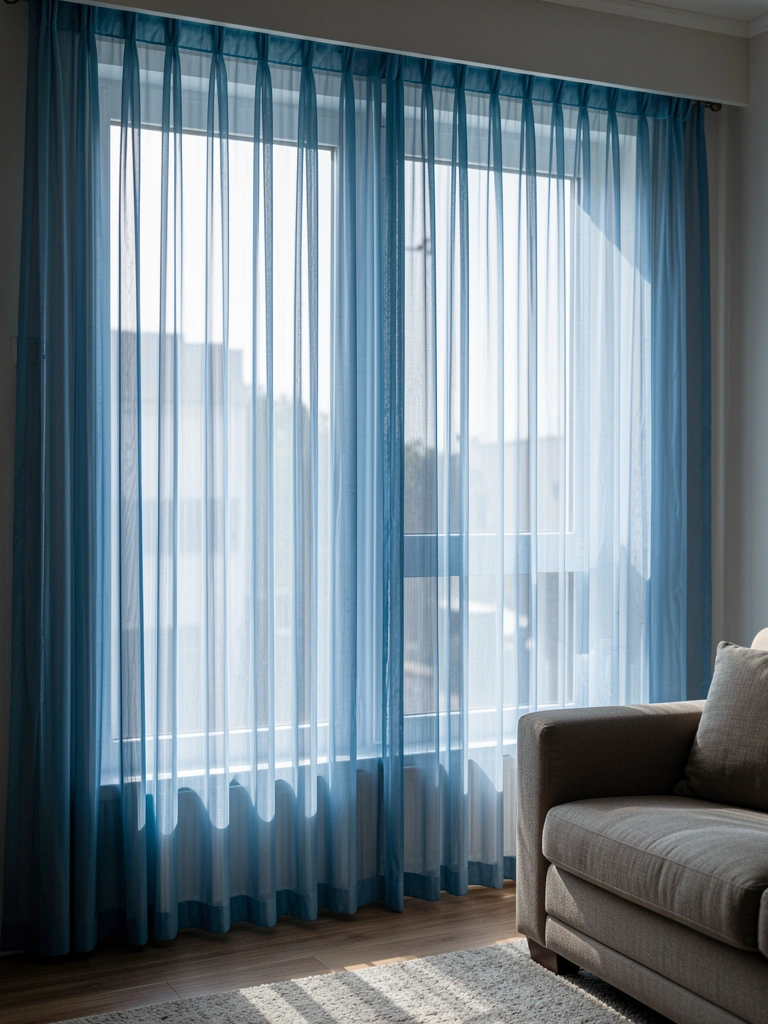
Start by noticing the light at different times of day and how you want the room to feel. If you want a bright, airy space pick a lighter blue and sheer fabrics; for a cozy TV room choose deeper blues and heavier weights that absorb light.
Think about the room’s mood and existing finishes—wood, brass, or chrome affect how blue reads. A personal tip: I once picked navy for a north-facing room and it felt flat until I added warm brass rods and a textured rug.
Shop this idea
2. Pick the right shade of blue for your palette
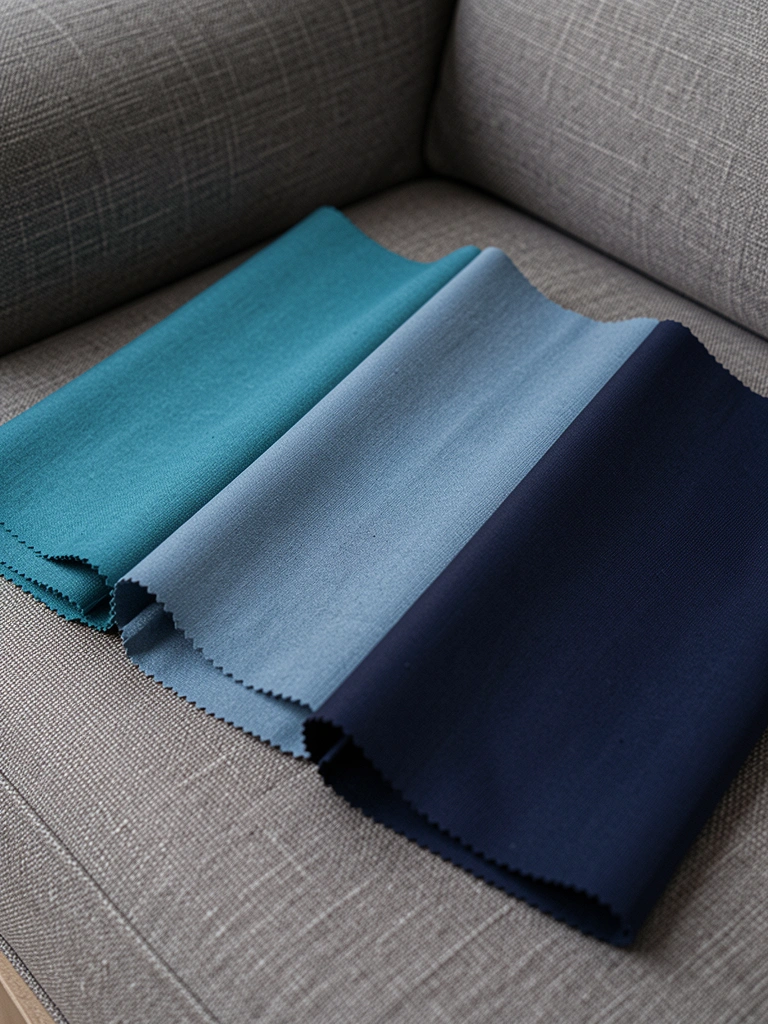
Blue ranges from warm teal to cool navy; choose a shade that complements your walls and furniture. If your sofa is gray, mid-tone blues feel harmonious; on cream walls a deeper blue adds contrast and drama.
When shopping, hold swatches against the wall and sofa at different times of day. When choosing blue living room curtains I test swatches on the curtain rod before committing.
Shop this idea
3. Choose fabric and weight based on function

Sheer linens let light through and feel relaxed; cotton blends are versatile and affordable; velvet or thick weaves add insulation and depth. Consider how often you’ll open and close them—machine-washable options suit busy households.
I prefer heavier fabrics in colder seasons for insulation, and light linens in spring and summer. If noise reduction matters, look for thicker weaves or lined panels.
Shop this idea
4. Decide on pattern and texture to add personality
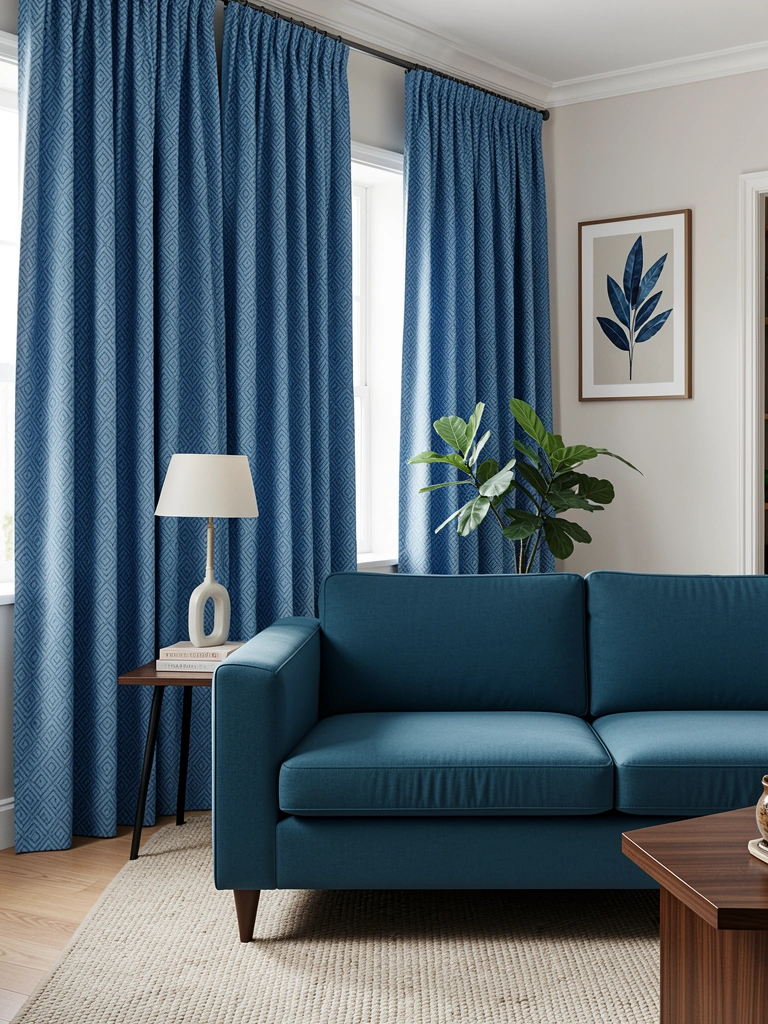
Solids are safe and let other decor sing; subtle patterns add interest without competing. If your furniture or rug has a bold pattern, choose solid or very small-scale patterned curtains to avoid visual clutter.
Texture can be as effective as color: slubby linen, nubby weaves, or soft velvet change light reflection. I once swapped patterned curtains for textured solids and the room instantly felt calmer.
Shop this idea
5. Measure length and choose a header style
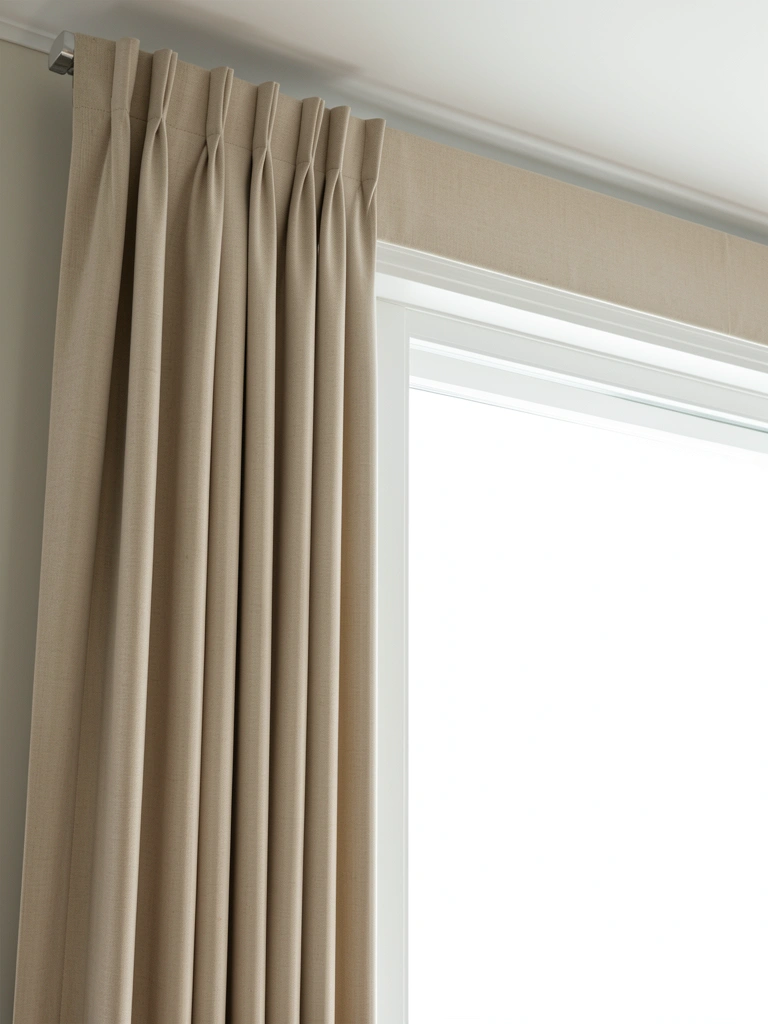
For a polished look hang the rod near the ceiling or at least 4–6 inches above the window frame to create height. Floor-length is standard—either just skimming the floor or gently puddled for a relaxed look.
Header styles change the curtain’s personality: grommets and pinch pleats read modern, rod pockets feel casual. My rule: tall ceilings get longer panels; in small rooms avoid puddling to keep things clean.
Shop this idea
6. Consider lining, blackout needs, and hardware durability
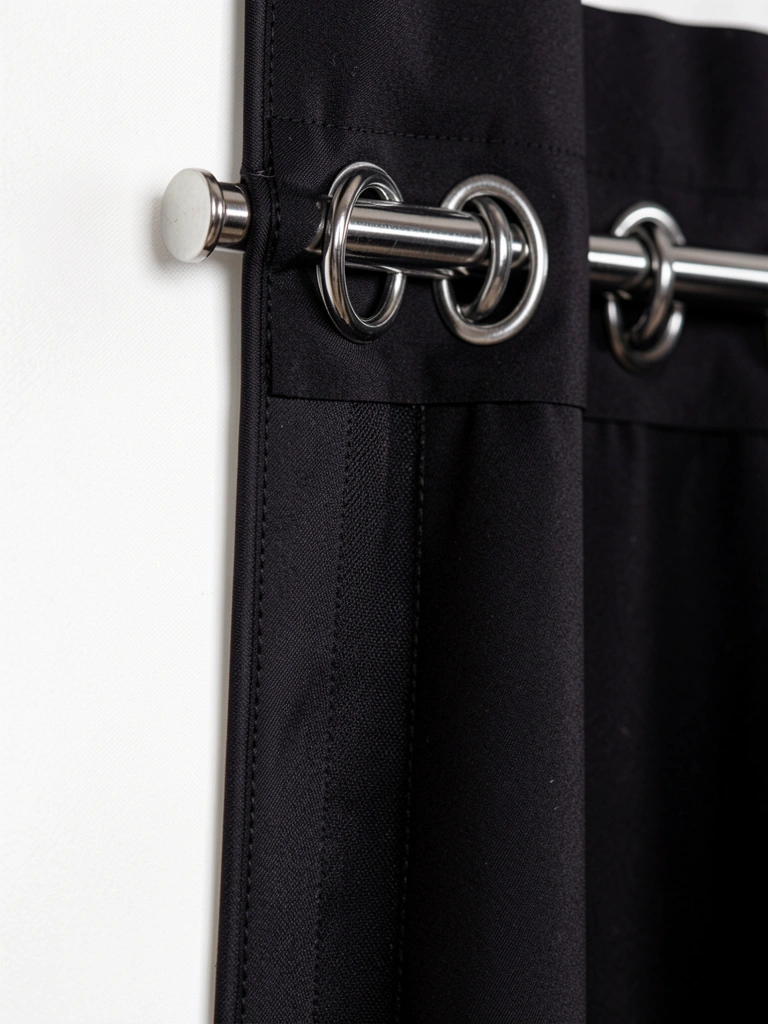
Lining adds weight, blocks light, and protects fabric from sun damage. Blackout linings are great for TV rooms or daytime naps; thermal linings add insulation in cold months. Choose hardware that can support the fabric weight.
I’ve swapped basic rods for sturdier metal ones and noticed better drape and less sag over time. If you rent, consider tension rods or removable brackets that won’t damage trim.
Shop this idea
Common Mistakes to Avoid
Mistake: Buying curtains only by color photo online.
Why it does not work: Lighting and screen color skew how blue appears, so you might end up with the wrong shade.
Do this instead: Order fabric swatches or small samples before buying. Fabric swatch packs help you compare in your actual room.
Mistake: Hanging the rod at the window frame level.
Why it does not work: This visually shortens the room and makes windows look smaller.
Do this instead: Mount rods higher and wider to create the illusion of taller windows. Use a durable adjustable curtain rod.
Mistake: Choosing a heavy fabric without checking hardware weight limits.
Why it does not work: Lightweight brackets can sag, leaving gaps or crooked panels.
Do this instead: Match heavier curtains with sturdy metal rods and brackets.
Final Thoughts
Choosing blue living room curtains is a mix of practical needs and simple style choices: match shade to your palette, pick fabric for function, and hang high for impact. I find starting with a swatch and one practical goal—more privacy, better insulation, or extra light—keeps the process easy and satisfying.
Try one small change first, like raising the rod or ordering a single panel to test color and drape. Which window in your living room would you update first and what problem do you want the curtains to solve?
Relevant Articles