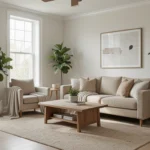

Small dining rooms can feel tricky, but a few smart choices let you have a pretty, functional place to eat without clutter. These dining room decor small space ideas focus on scale, multiuse furniture, and light — everything a compact dining area needs.
I’ll walk you through easy, realistic tweaks that fit apartments and small homes, with renter-friendly options and styling tips that look intentional not crowded.
10 Small-Room Dining Room Decor Small Space Ideas
Here are ten compact, stylish solutions that solve specific space problems while keeping your dining area light and livable.
1. Wall-Mounted Drop-Leaf Table for Everyday Flexibility
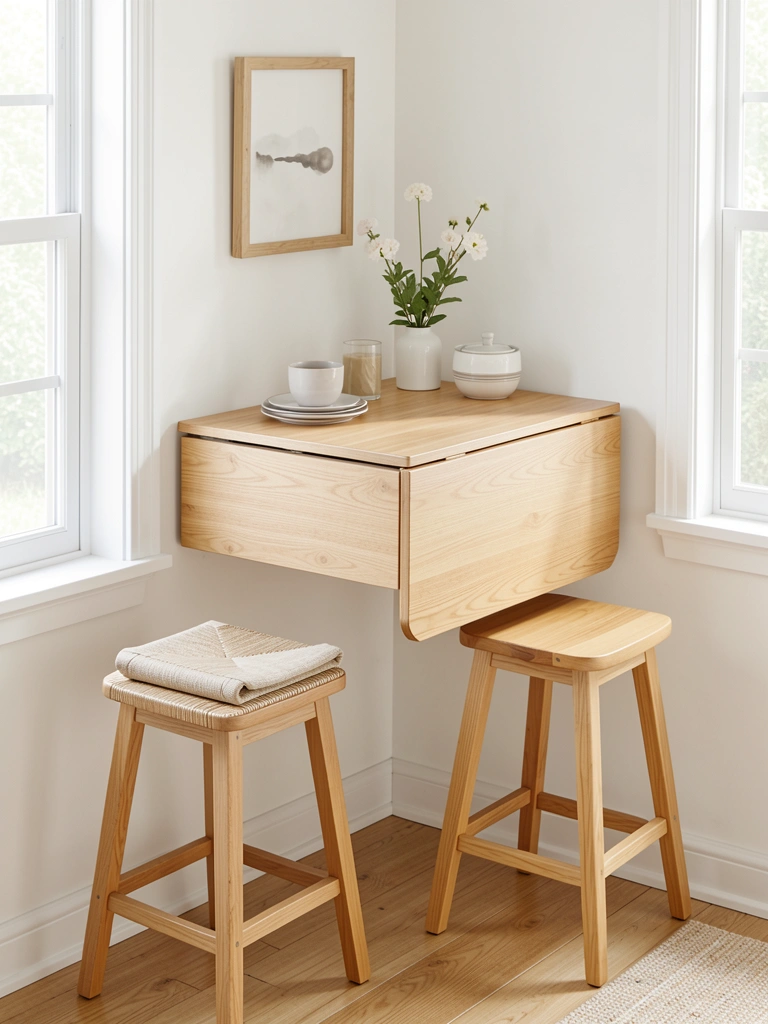
A wall-mounted drop-leaf table gives you tabletop when you need it and clears the floor when you don’t. Mount it at standard dining height against an empty wall or beneath a window to free up walkways. This solves the problem of cramped circulation while keeping seating flexible for two to four people.
Layer a slim runner and a small centerpiece to keep the top tidy. Choose stools that tuck fully underneath and a wall paint tone that reads warm and forgiving. I used a wall table in my first city flat and loved that it made hosting feel possible without a permanent table footprint.
Shop this idea:
- Wall Mount Drop Leaf Table Compact Dining Table
- Backless Counter Stools Set of 2
- Under-Cabinet LED Strip Light Warm White
2. Built-In Banquette with Hidden Storage
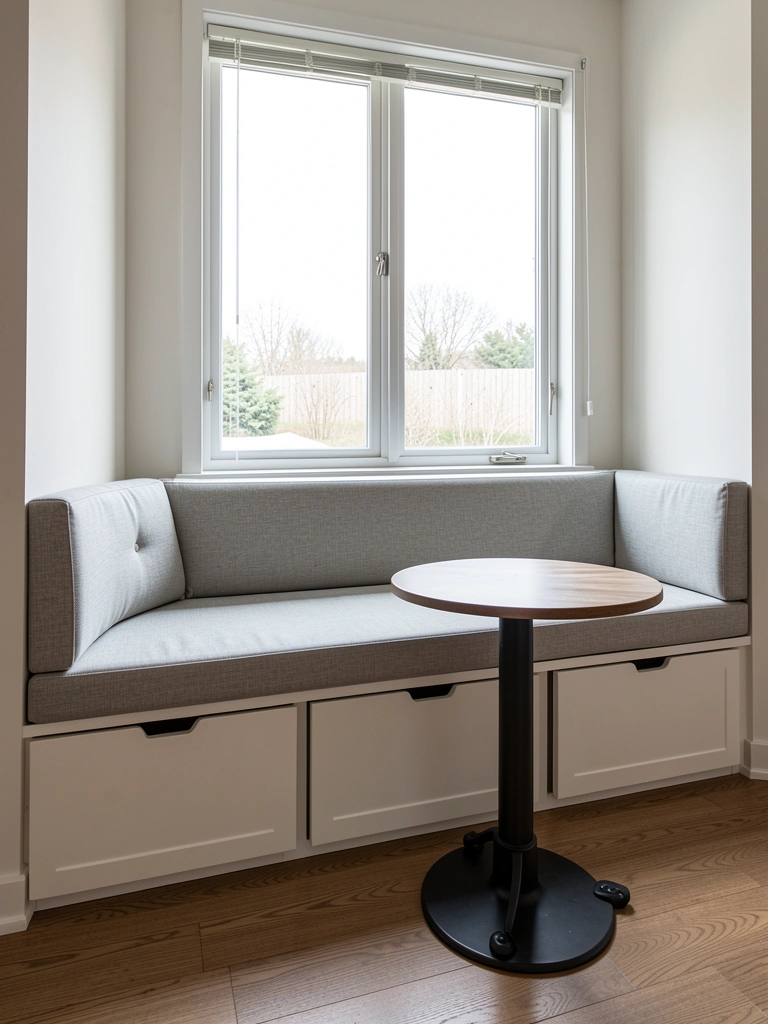
A narrow banquette along one wall or under a window gives more seats using the same square footage and adds built-in storage beneath the bench. Fit a slim table in front and choose hinged or pull-out storage to hide linens, placemats, or board games. This solves the twin problems of seating and storage in a small dining zone.
Style with low-profile cushions, two patterned pillows, and a tray for everyday dishes. Use wood and linen tones to keep the look calm. I’ve installed a bench in a compact alcove and was surprised how much clutter it swallowed while making the corner feel purposeful.
Shop this idea:
- Storage Bench with Lift-Top Seat
- Custom-Fit Bench Seat Cushion Rectangle
- Decorative Throw Pillow Covers Set
3. Small Round Pedestal Table to Improve Flow
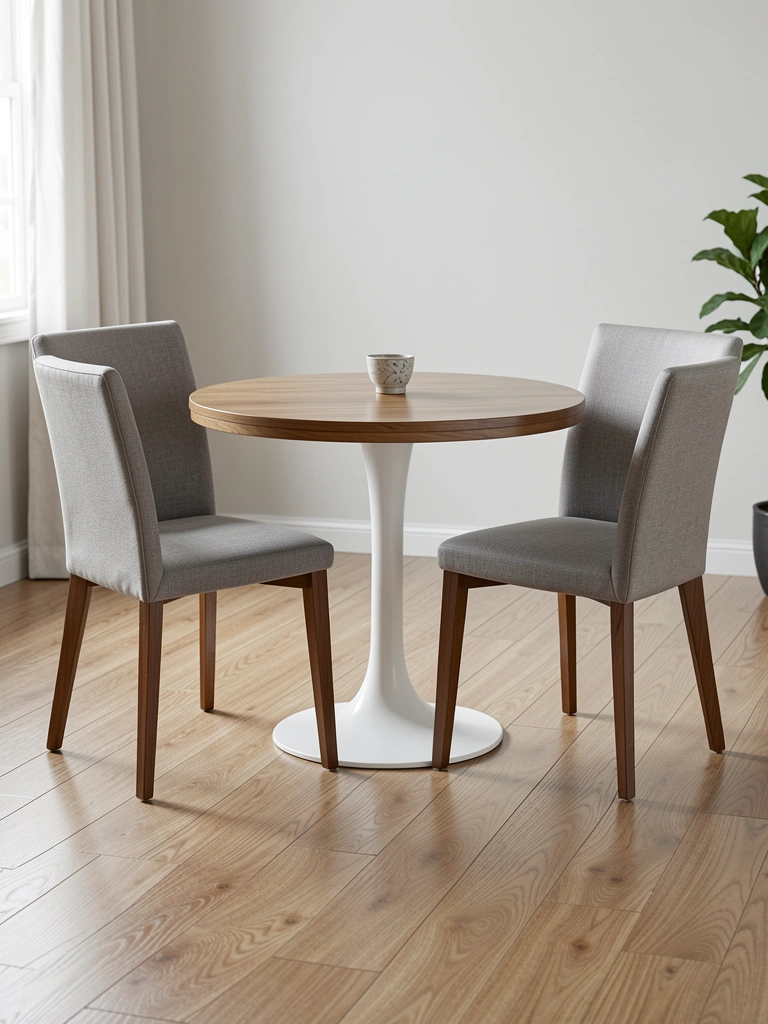
A round pedestal table keeps legs out of the way and helps traffic move around the seating. Opt for a 36–42 inch diameter for tight spaces. The pedestal base also makes it easier to squeeze in extra chairs for guests. This fixes the awkward corner collisions that happen with rectangular tables.
Choose mixed-material chairs—rattan, metal, or slim wood—and a simple woven runner to avoid visual clutter. I swapped a rectangular table for a pedestal once and was amazed how much freer the tiny room felt while keeping the same dining capacity.
Shop this idea:
- Small Round Pedestal Dining Table 36 Inch
- Armless Dining Chairs Set of 2 Slim Profile
- Wood Serving Tray Oval
4. Oversized Leaning Mirror to Double Light and Depth
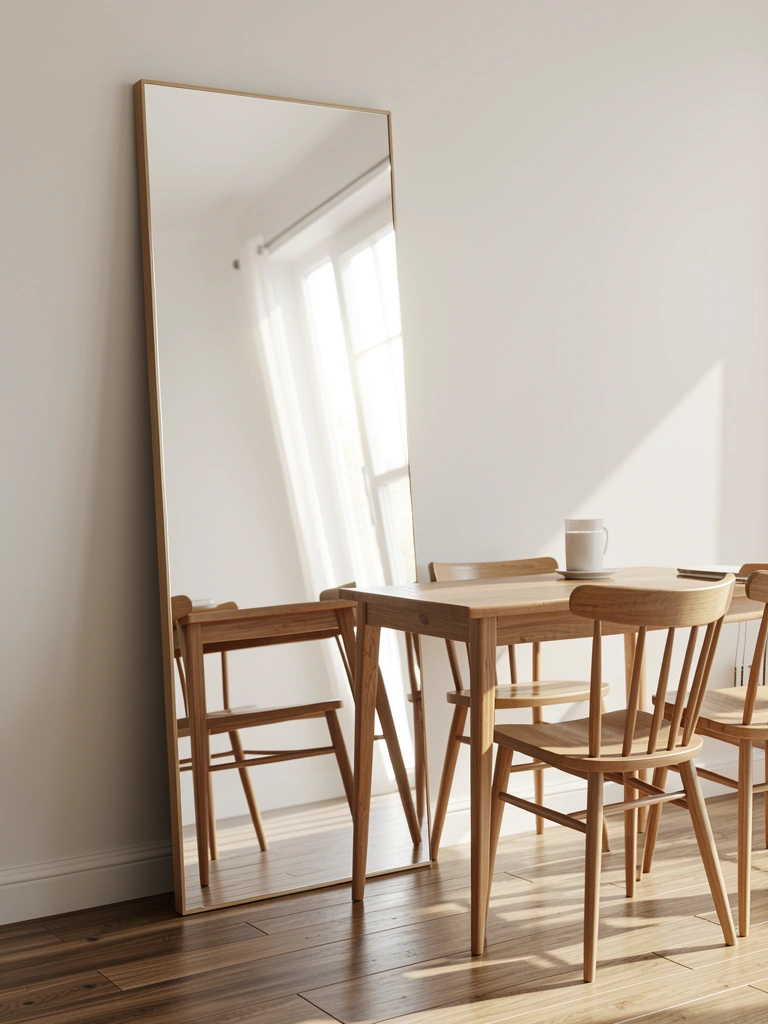
A tall leaning mirror placed opposite a window or light source visually doubles the room and amplifies natural light. Lean it on a short wall near the table or rest it atop a slim console. The mirror solves the squeeze feeling by creating perceived depth and brightening darker corners.
Keep the frame simple—black metal or warm wood—and style a small vase or lamp in front to anchor the reflection. I propped a mirror in my dining nook and immediately felt the room looked larger and friendlier when guests arrived.
Shop this idea:
- Large Floor Leaning Wall Mirror 24×72
- Slim Profile Console Lamp Soft White Shade
- Small Ceramic Bud Vase
5. Slim Buffet for Serving Without the Bulk
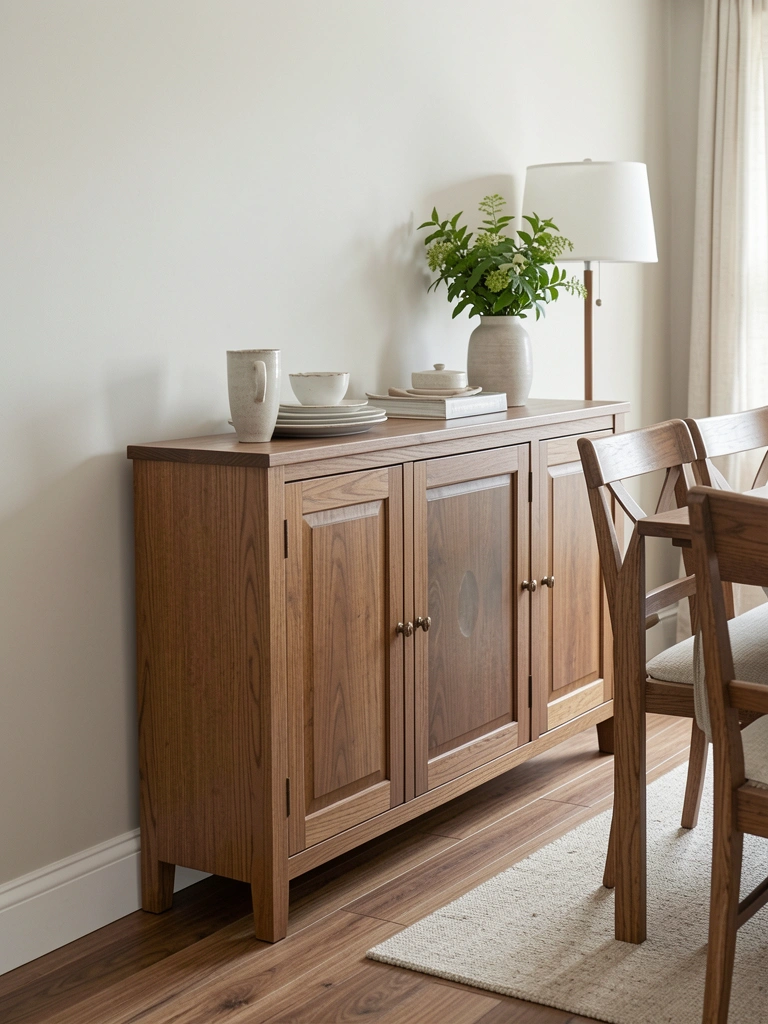
A narrow buffet (12–16 inches deep) provides surface area for serving and hides dishes while keeping a slim profile. Place it against the longest wall to serve as a styling anchor without crowding the room. This approach solves the lack of serving space when you entertain without stealing circulation lanes.
Use the top for a rotating vignette: a tray, lamp, and a stack of plates. I swapped a wide buffet for a slim one and kept my walking path clear while gaining a practical serving station for dinner parties.
Shop this idea:
- Narrow Sideboard Buffet Console 14 Inch Deep
- Round Woven Placemats Set
- Cordless Table Lamp Warm Light
6. Bar Cart That Doubles as Prep and Serving Station
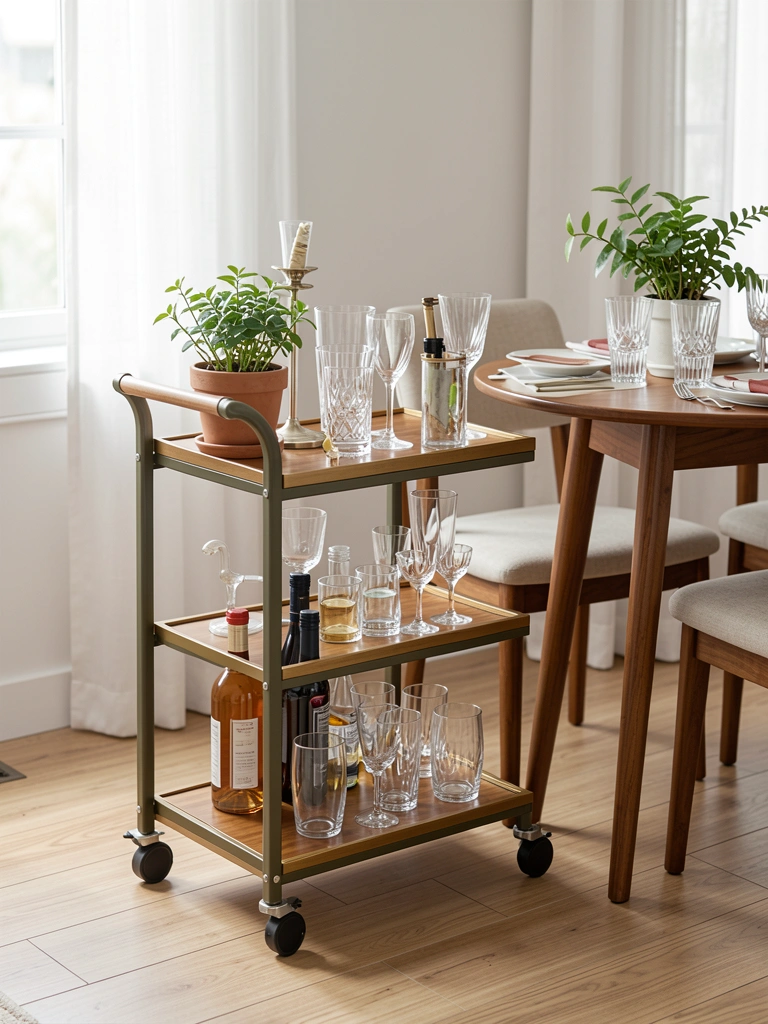
A compact bar cart on casters brings extra surface and storage that you can roll away when not needed. Use it for glassware, serving bowls, or to stage a quick buffet. When guests arrive, it becomes an instant service station; otherwise it tucks into a corner or next to a buffet.
Style with a mix of low and tall items, a folded linen, and a small tray for utensils. I keep a cart in my dining area and find it invaluable for hosting and quick meal prep without building permanent shelving.
Shop this idea:
- Two-Tier Rolling Bar Cart Metal and Wood
- Opal Glassware Set 8-Piece
- Decorative Serving Tray Rectangular
7. Slim Pendant Light to Save Visual Space
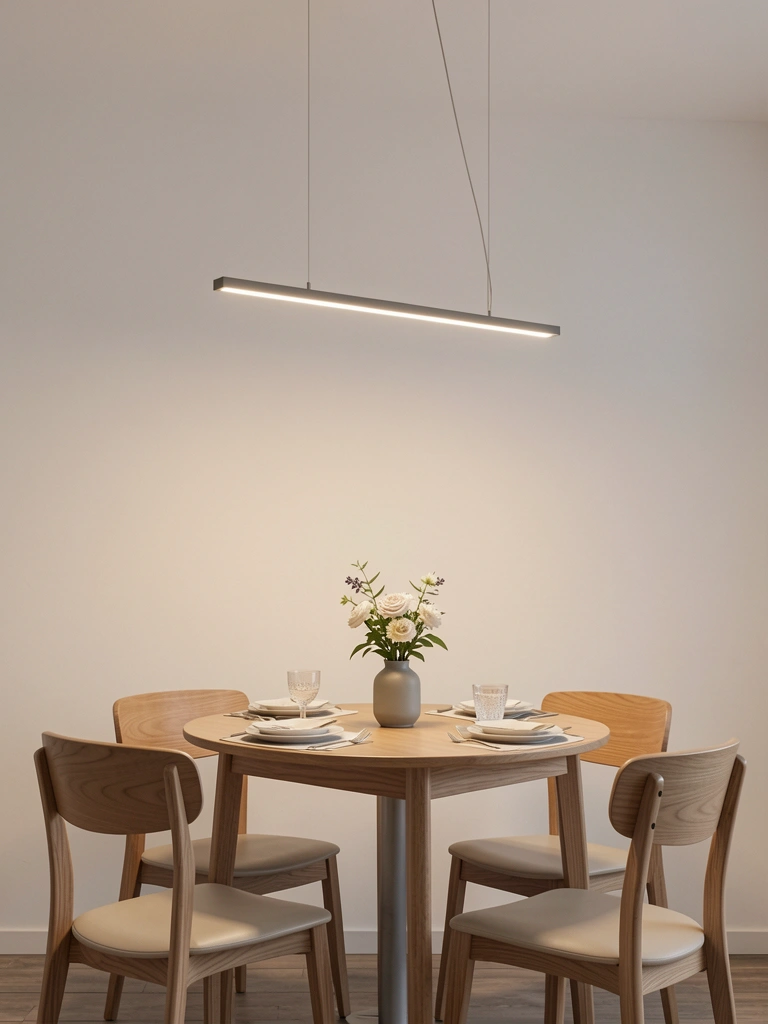
Choose a low-profile pendant or narrow linear fixture scaled to your table to avoid cluttering the ceiling and to keep sightlines open. A slim silhouette offers targeted light without a heavy visual footprint. Proper lighting solves poor ambiance and helps define the dining zone within an open plan.
Aim for warm bulbs and a dimmer to set the mood. I replaced an oversized fixture with a slim pendant and the room instantly looked cleaner and more proportionate to the table size.
Shop this idea:
- Slim LED Linear Pendant Light 36 Inch
- Dimmable LED Bulb Warm White 2700K
- Smart Dimmer Switch Wi-Fi Compatible
8. Round Rug to Anchor the Dining Nook
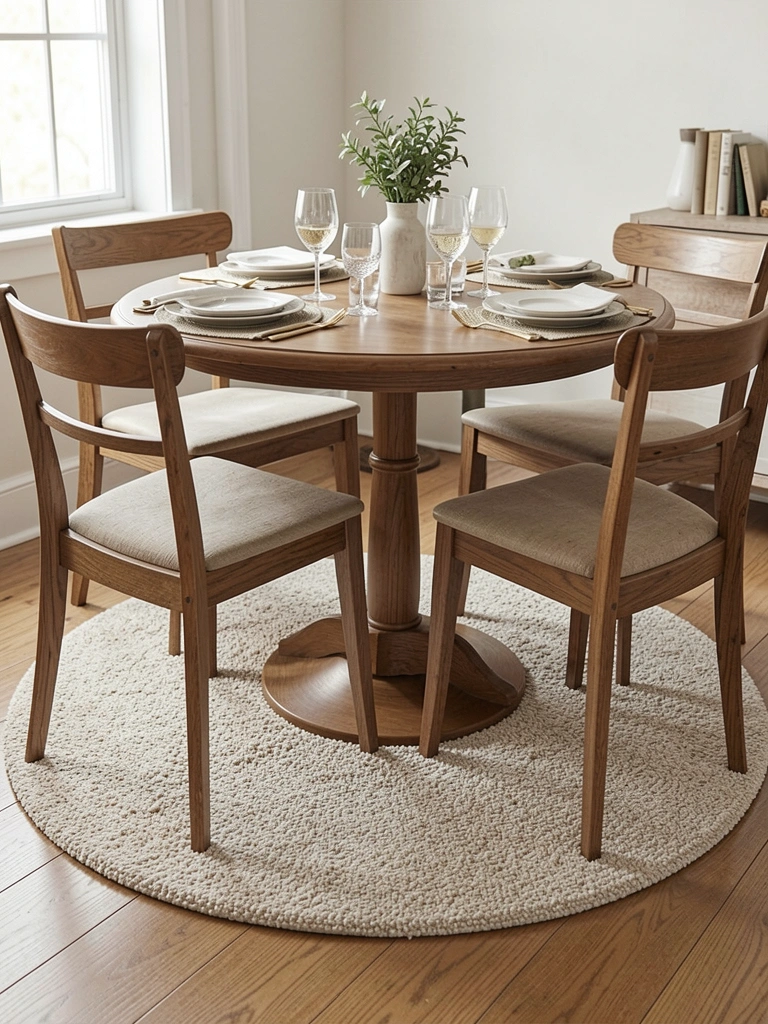
A round rug sized to fit the table and chairs when pulled out visually anchors the dining area and softens noise. Pick a low-pile, stain-resistant rug in a subtle pattern to hide wear and keep cleaning simple. This approach defines zones in an open-plan studio without building walls.
Add a non-slip pad and match the rug tones to wood and metal accents for cohesion. I put a round rug under our eat-in table and it made the corner feel like a curated room rather than leftover floor space.
Shop this idea:
- Round Low Pile Area Rug 5ft Stain Resistant
- Rug Gripper Non-Slip Pad Round
- Felt Chair Leg Protectors Pack
9. Slim Folding Chairs Hung Neatly for Occasional Guests
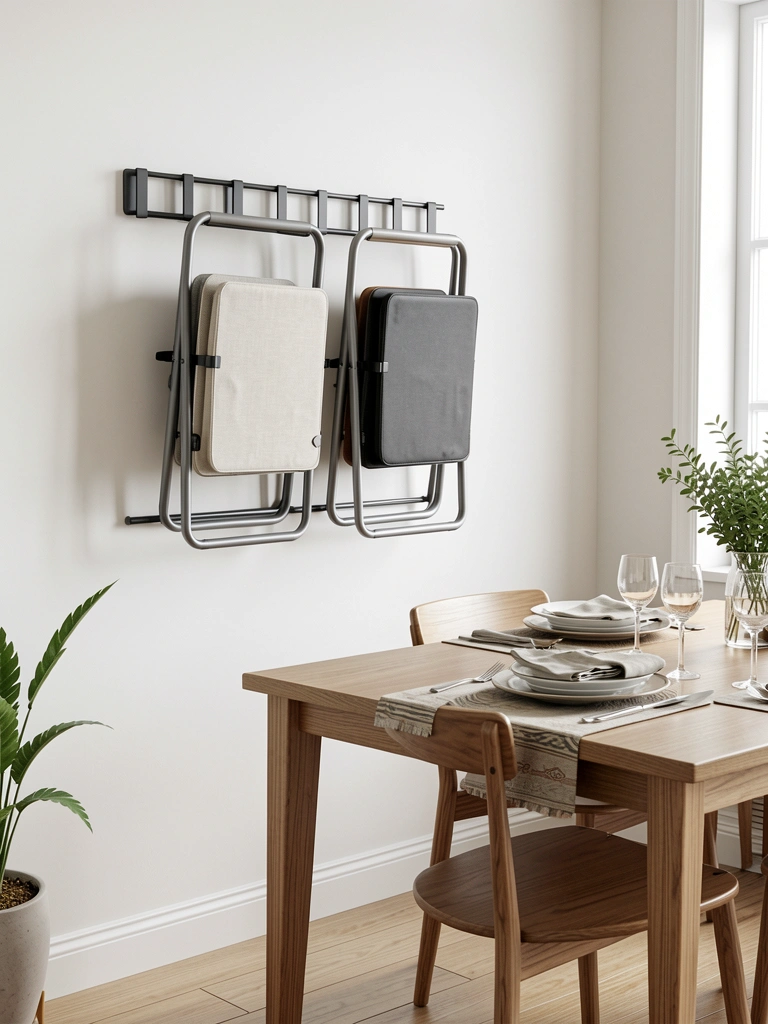
Keep a set of stylish folding or stacking chairs hung on a wall rack or tucked in a closet for extra guests. Choose lightweight designs that look decorative while stored. This solves the problem of bulky spare chairs taking up daily space while still giving you versatility for dinner parties.
When not in use they become part of the wall’s rhythm; add a hook with a small cushion for comfort. I store folding chairs vertically and they’ve saved more floor space than I expected, while still being ready when friends come over.
Shop this idea:
- Folding Bistro Chairs Set of 2 Lightweight
- Wall Mounted Chair Rack Heavy Duty
- Portable Seat Cushions Pack
10. Picture Ledge Above a Slim Console for Rotating Art
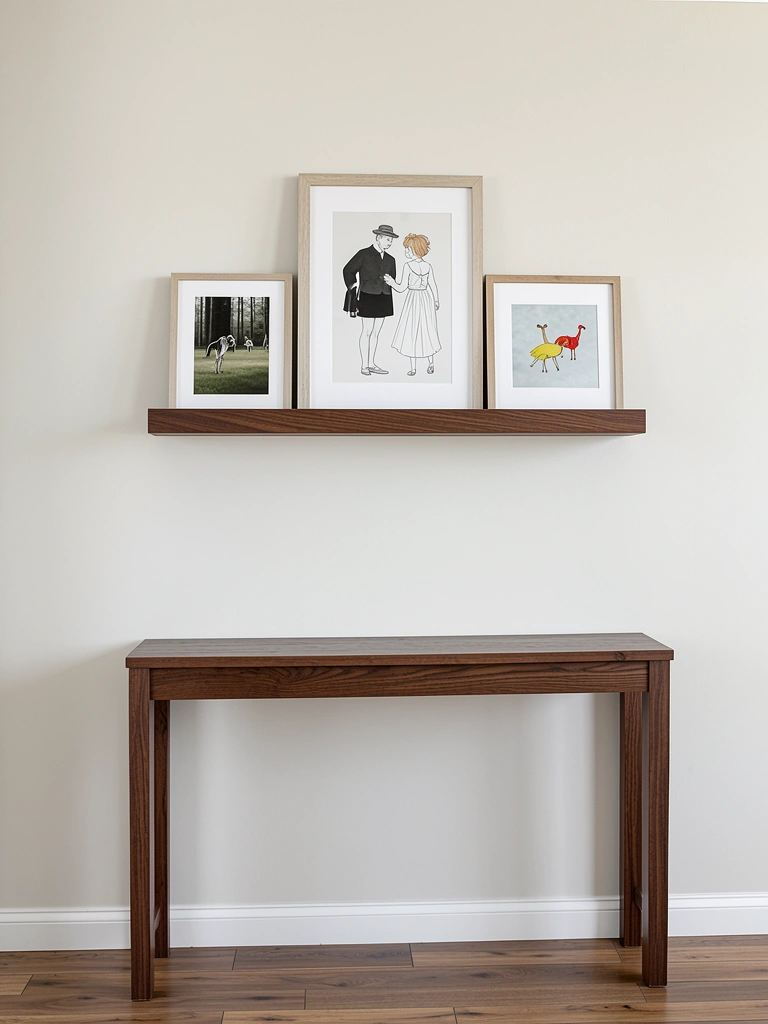
A picture ledge gives you a place to lean changing art, a plate collection, or seasonal scenes without committing to permanent wall holes. Place it above a slim console or buffet to create a layered focal point. This frees you from precise measuring and lets you swap pieces as your style changes.
Mix frames and a small sculpture or bowl for dimension, and keep frames lightweight so you can move them easily. I rotate prints on a ledge every few months, which keeps our dining corner feeling fresh without a major redecorate.
Shop this idea:
- Wall Picture Ledge Floating Shelf 36 Inch
- Lightweight Framed Art Prints Set
- Museum Putty for Securing Frames
Final Thoughts
Small dining rooms shine when you prioritize circulation, multiuse pieces, and light. Pick one improvement—a wall table, a slim buffet, or a mirror—and style around it. I often recommend starting with lighting because it affects everything else in a compact room.
Which small tweak sounds easiest for your space to try this week?
Relevant Articles