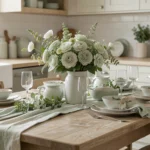

Styling a kitchen table should help meals feel intentional without adding clutter. This guide gives simple, repeatable looks for different needs—everyday meals, weekend brunch, and cozy nights—so your kitchen table decor feels useful and pretty at the same time.
How To Style Kitchen Table Decor
A few easy styling patterns make the table look pulled together without constant fuss: anchor, layer, and leave breathing room.
1. Low Centerpiece + Runner Anchor
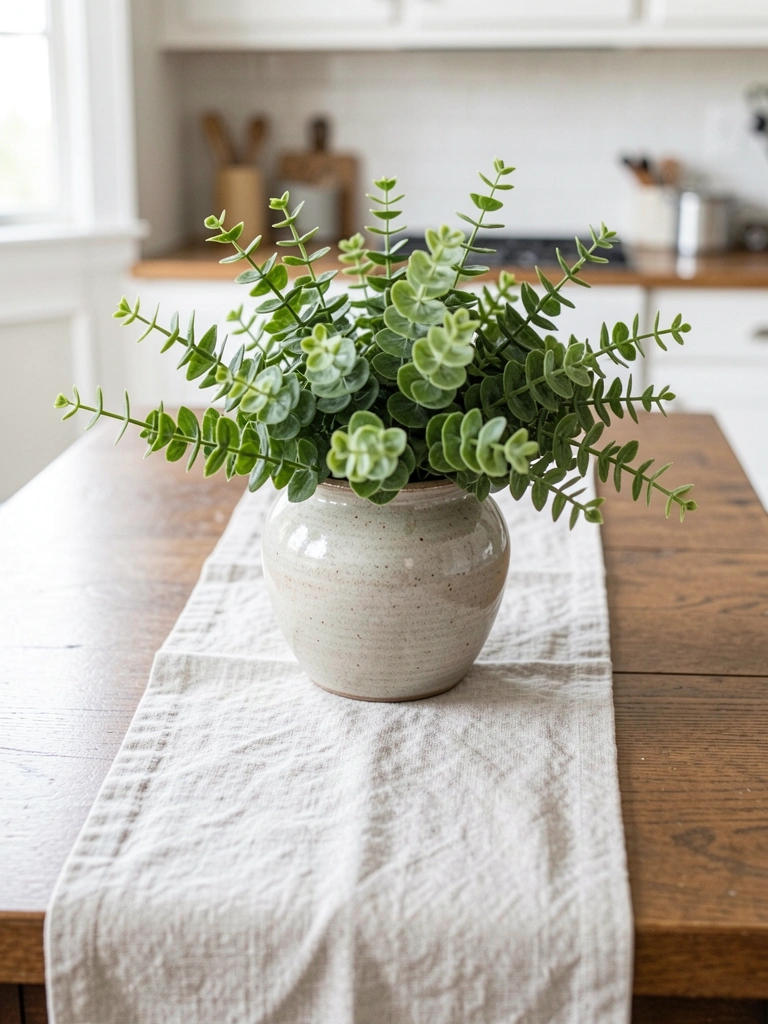
Place a narrow linen runner down the center and a low vase with fresh or faux greenery directly on it. This anchors the table visually and keeps sightlines clear for conversation and meal service.
Keep the vase low—about 6–8 inches—so guests see each other. Use neutral linens and a single texture for calm balance; avoid tall bouquets that block the table. I often reuse the same runner because it instantly makes any meal feel planned.
Shop this idea
2. Functional Every-Day Styling
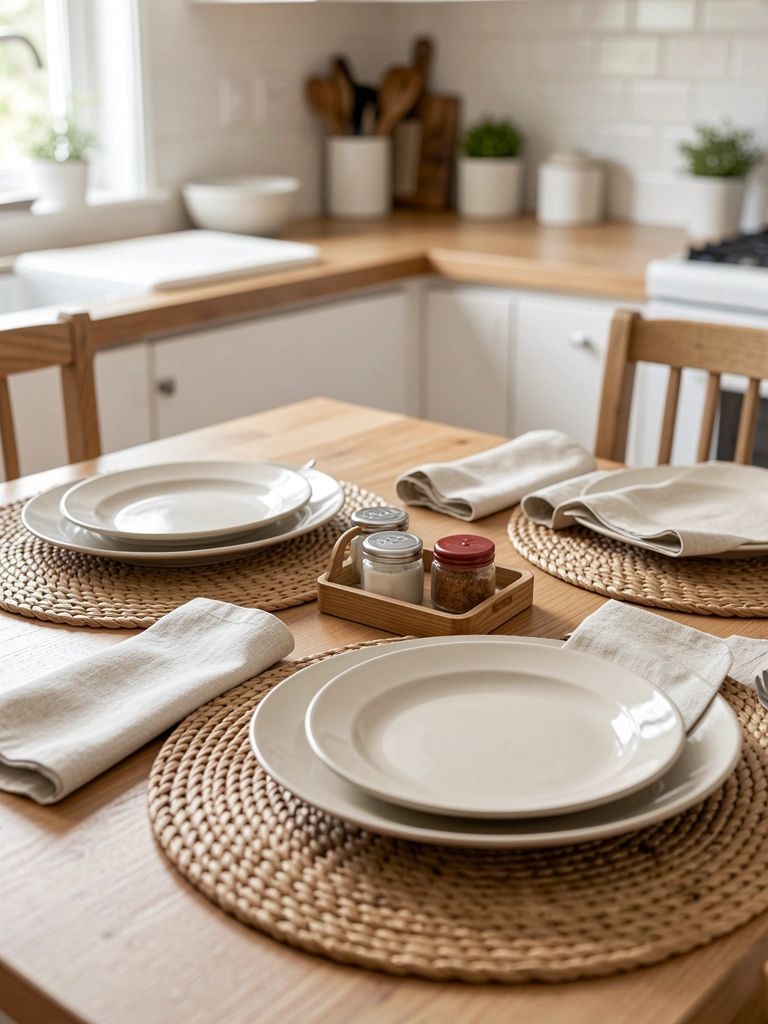
Keep daily table styling practical: a set of woven placemats, cloth napkins in a small jar, and a compact tray for salt, olive oil, and napkins. This makes the table usable and tidy, even when meals are quick.
Choose materials that are easy to wipe or wash and scale items so they do not crowd dinner plates. A small tray prevents loose items from traveling across the table. I prefer neutral placemats because they hide crumbs between cleanings.
Shop this idea
3. Seasonal Vignette That Swaps Easily
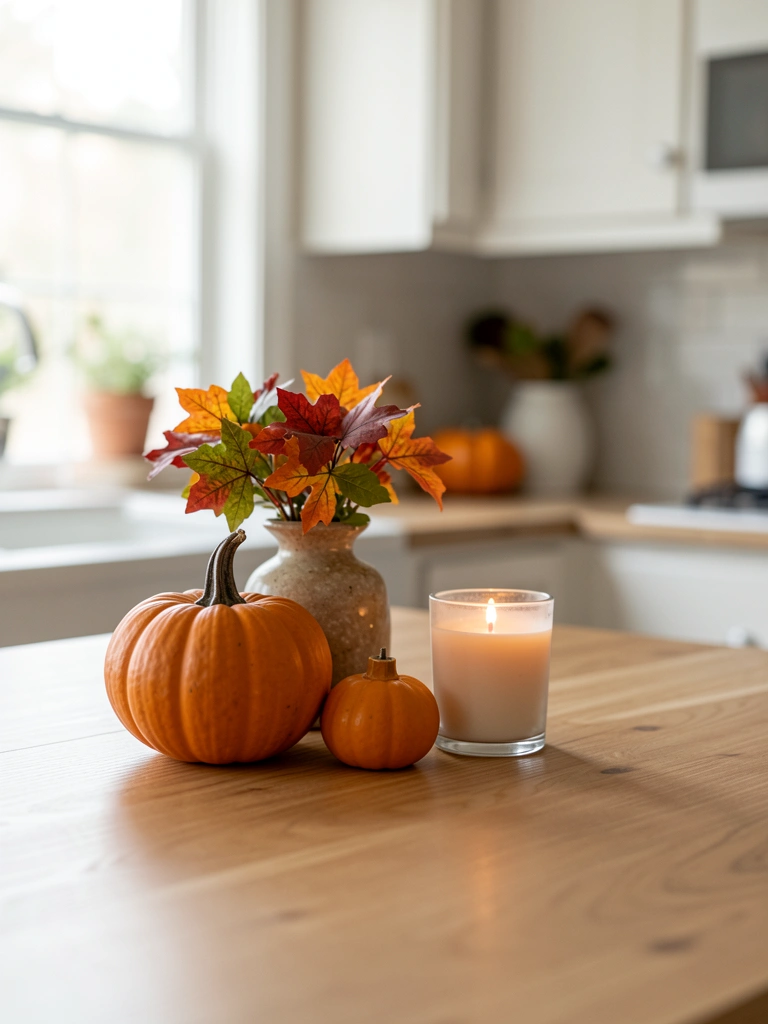
Create one small vignette you can swap seasonally—think a bowl with seasonal fruit, a single small decorative object, and a candle. Keep the cluster to one end or the center and change one element each season.
Limit items to three so the look changes quickly without a big cost. Match materials to the season: ceramics and soft textiles for winter, woven baskets for summer. I like rotating one piece; it keeps the table feeling fresh with little effort.
Shop this idea
4. Casual Two-Top Setup
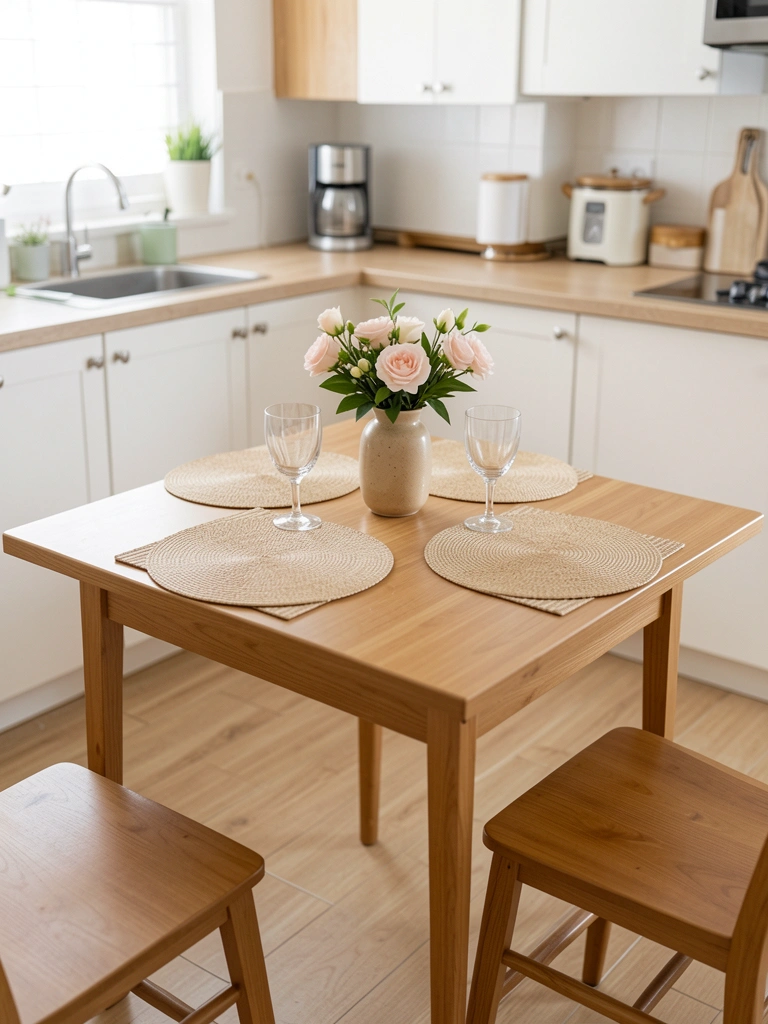
For a small table or everyday two-top, keep everything proportionate: two placemats, two matching glasses, and one low shared centerpiece. This keeps the table intimate and functional without feeling sparse.
Leave at least 10–12 inches of space per person for comfort and serving. Use matching elements to make the small setup feel intentional rather than cramped. I find a single shared centerpiece keeps the table from looking unfinished.
Shop this idea
5. Evening Ambiance Layer
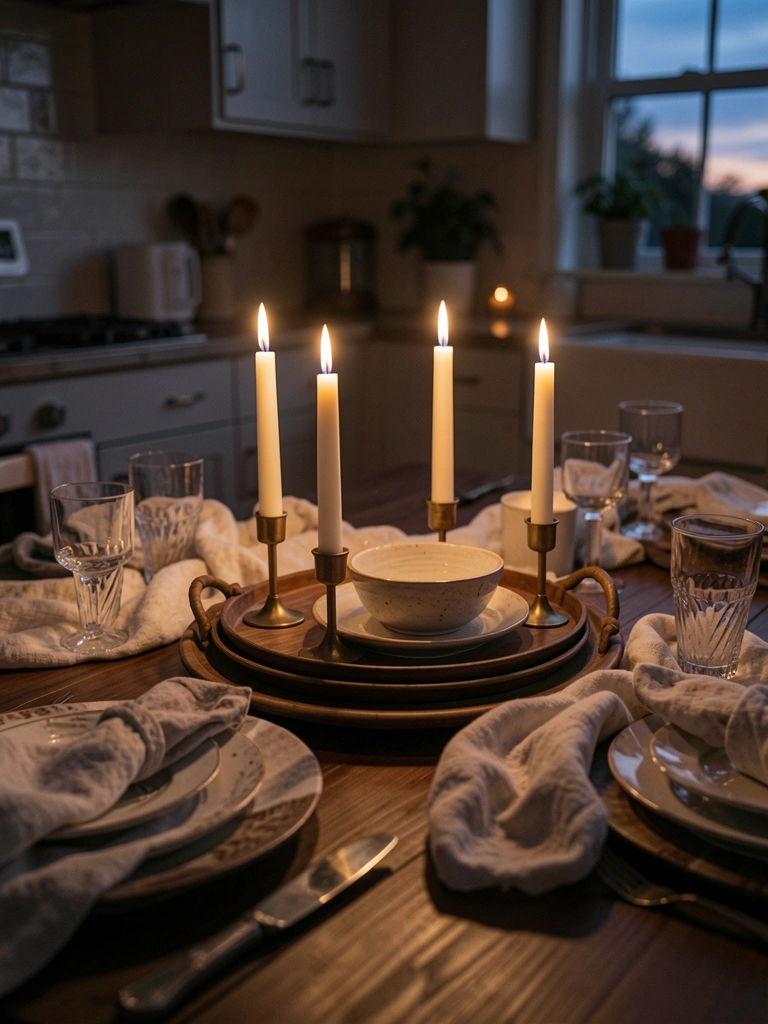
For dinners, add a small tray with candlelight and a soft textile like a draped napkin or folded runner. Layering a tray keeps candles and glasses contained and adds a deliberate, cozy look.
Balance warm candlelight with a matte or slightly reflective tray to catch the glow. Never place candles directly on wood without protection. I usually swap in a textured runner at night—it changes the table mood instantly.
Shop this idea
Common Mistakes to Avoid
Mistake: Using a centerpiece that is too tall.
Why it does not work: It blocks sightlines and conversation across the table.
Do this instead: Choose low vases or a flat tray centerpiece like a low ceramic vase.
Mistake: Overcrowding with too many small objects.
Why it does not work: The table looks busy and there is no room for serving.
Do this instead: Limit decor to three items max or group items on one tray.
Mistake: Matching every item exactly.
Why it does not work: The result can feel flat and staged.
Do this instead: Mix textures and one accent color to add depth.
Final Thoughts
Kitchen table decor works best when it solves a practical need while looking intentional. Anchor the table with a runner or low centerpiece, layer for texture, and keep enough open space for serving. My favorite habit is rotating one small item each week; it keeps the table feeling cared for without extra work.
Start with one simple change—swap a placemat or add a low vase—and see how it changes the room. Which small change will you try first on your table?
Relevant Articles