

Choosing the right light can make your dining room feel intentional and comfortable, but the options can be overwhelming. This guide walks you through practical decisions—scale, style, finish, bulbs, dimming, and budget—so you pick modern dining room light fixtures that fit your space and lifestyle.
How To Choose Modern Dining Room Light Fixtures
Start by measuring your room and thinking about how you use it; the right fixture balances function and style, not just looks.
1. Size and Height: Get the Scale Right
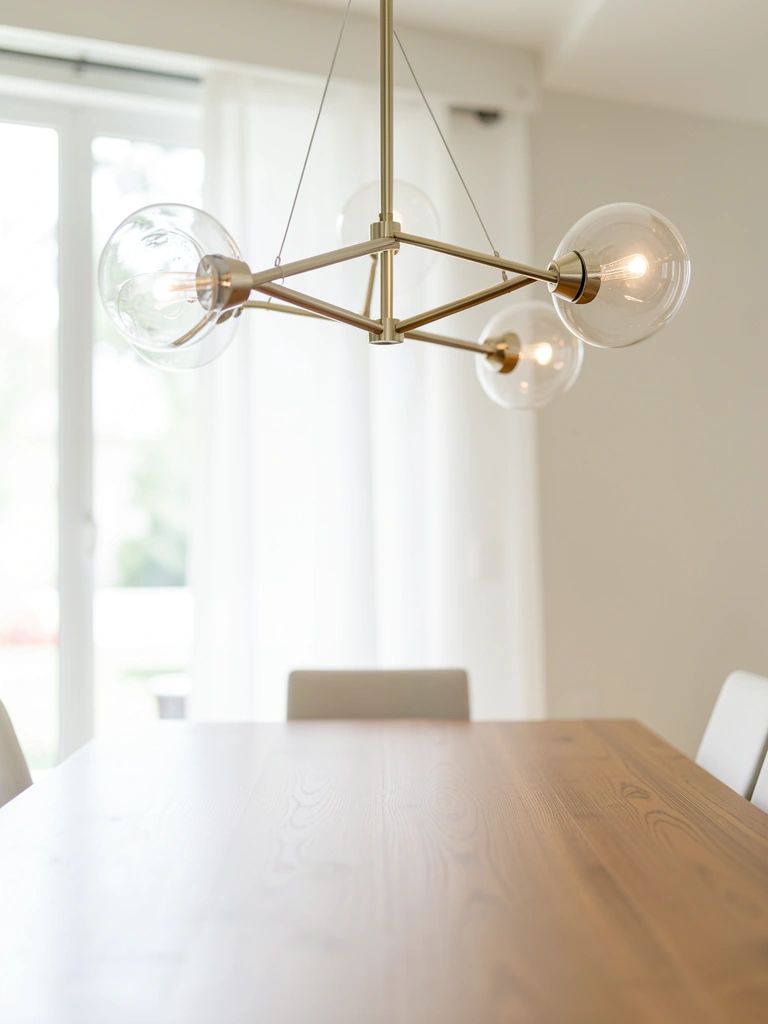
Pick a fixture that matches table size and ceiling height so the light feels intentional and doesn’t dominate the room. For a rectangular table, aim for a fixture 12–18 inches narrower than the table on each side, and for round tables keep the fixture diameter about half to two-thirds the table width.
Hang fixtures 28–34 inches above the table for standard 8-foot ceilings; add 3 inches per extra foot of ceiling height. I often see fixtures hung too high; standing back and visualizing a seated eye line helps avoid that common mistake.
Shop this idea
- Adjustable Pendant Lighting Kit
- Ceiling Height Measuring Tool
- Dimmable LED Tape Light for Ambient Accents
2. Fixture Type: Match Function to Form
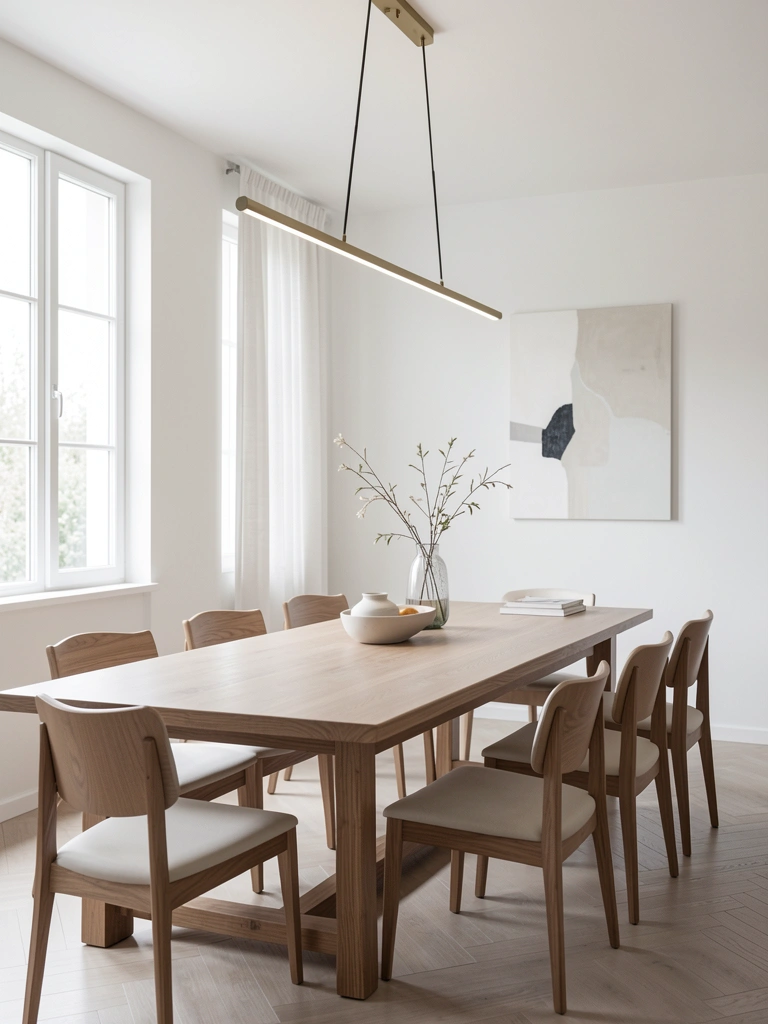
Decide whether you need a single statement chandelier, a row of pendants, a linear suspension, or subtle recessed lighting based on the table shape and room layout. A linear chandelier works well for long tables, while a cluster of pendants suits round or square tables and creates a modern layered look.
Think about how the fixture affects sightlines and conversation; I prefer pendants with opaque bottoms or diffusers where guests sit so the bulbs don’t glare. Choosing the right type solves both lighting quality and the room’s overall balance.
Shop this idea
3. Layering and Controls: Make Light Flexible
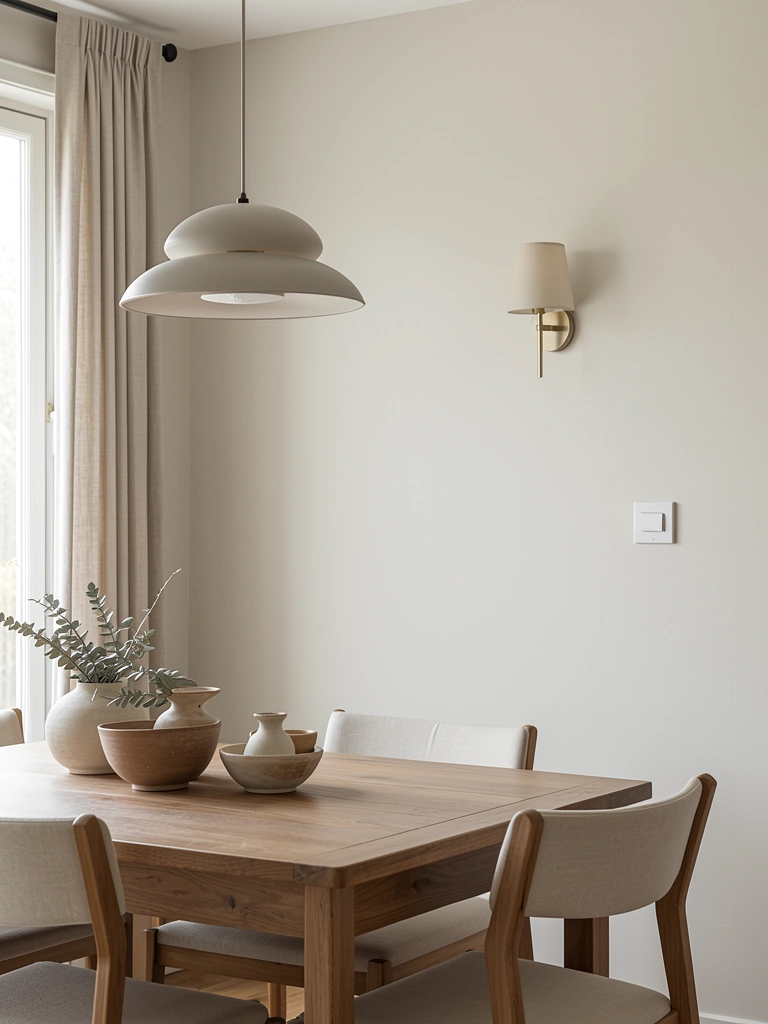
Plan at least two layers: the main fixture for task and focal light, plus ambient or accent lighting like wall sconces, a floor lamp, or dimmable recessed cans. A dimmer is essential for dining areas so you can shift from bright family dinners to softer, intimate evenings.
I always add a dimmer even on LED fixtures; it changes how the room feels without needing a different fixture. Choosing fixtures rated for dimming and pairing them with compatible dimmers saves frustration.
Shop this idea
- Single Pole/3-Way LED Dimmer Switch
- Modern Wall Sconce for Accent Lighting
- Smart Dimmer Compatible with LEDs
4. Finishes and Materials: Coordinate with the Room
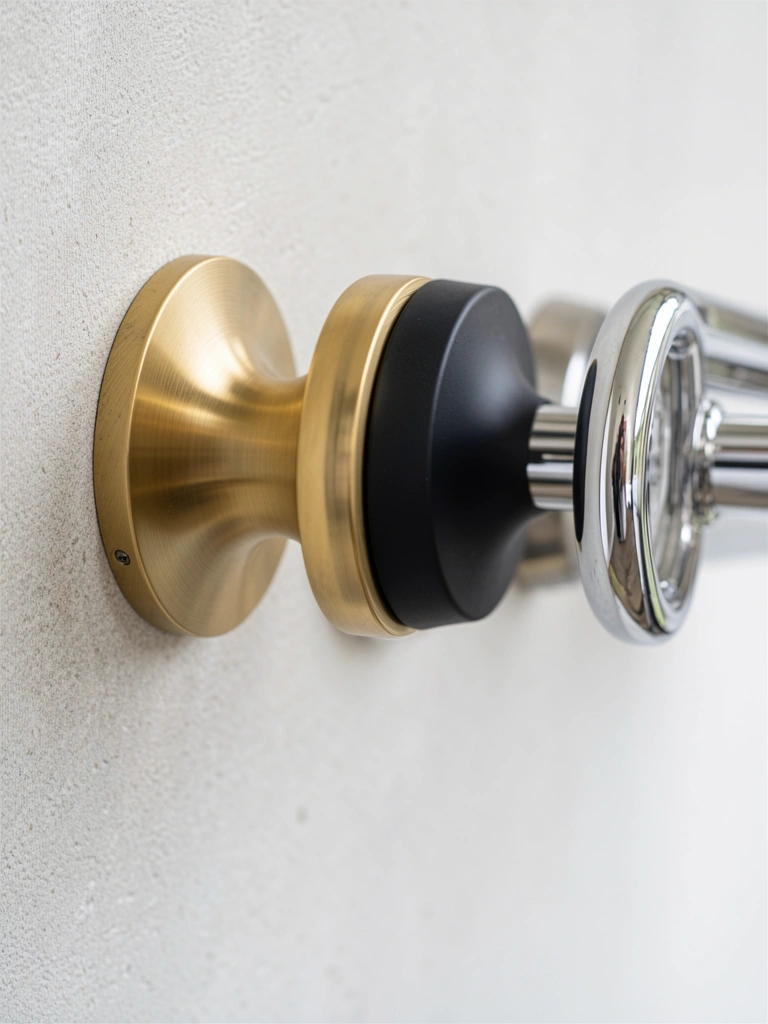
Choose a metal finish that complements existing hardware or furniture—matte black for contrast, warm brass for coziness, or chrome for a sleek look. Wood, glass, and fabric shades can soften modern fixtures and add texture without losing a clean aesthetic.
I like mixing finishes carefully: pick a dominant finish then introduce one accent finish for interest. Avoid too many competing metals; a cohesive palette keeps the room feeling calm and intentional.
Shop this idea
5. Bulb Type and Color Temperature: Set the Mood
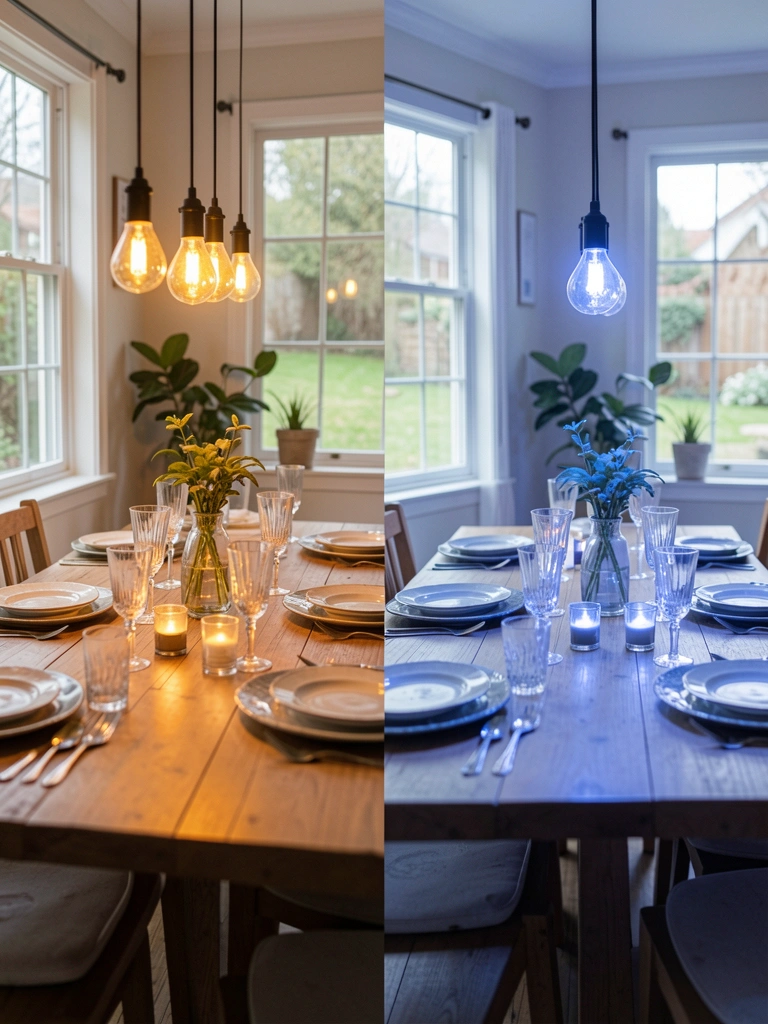
Select LEDs with good color rendering (CRI 90+) and a color temperature around 2700–3000K for warm, flattering light in dining rooms. Avoid very cool temperatures unless you want a crisp, modern gallery feel; most people prefer warm light for food and faces.
I swapped to high-CRI LEDs years ago and noticed dinner conversations felt more relaxed and skin tones looked better. Also choose dimmable bulbs if you’ll use a dimmer.
Shop this idea
6. Budget and Installation: Practical Choices
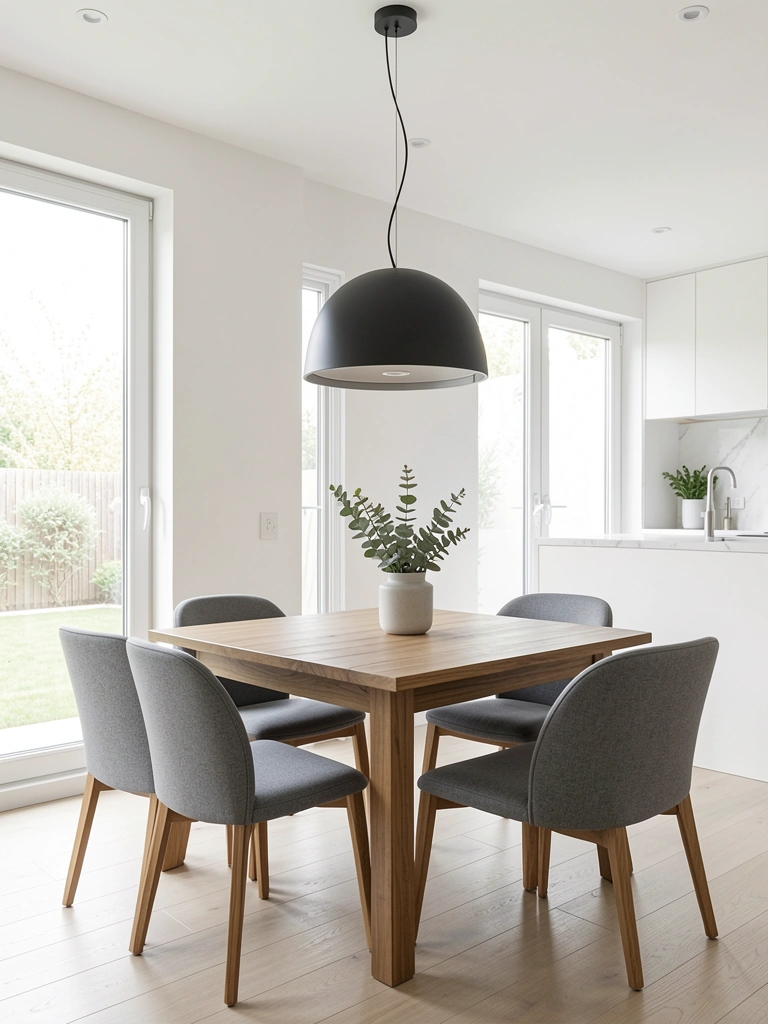
Decide what you can splurge on and what to save on: invest in a high-quality fixture for focal pieces and save on simple recessed cans or basic sconces. Factor installation costs—hardwired fixtures often need an electrician, while plug-in pendants can be easier and cheaper to try out first.
I recommend buying one standout fixture you love and pairing it with budget-friendly accents to stretch your budget. If installation feels daunting, get an on-site quote before buying to avoid surprises.
Shop this idea
- Affordable Modern Pendant Light
- Plug-In Pendant Cord Kit
- Magnetic Mounting Plate for Easy Fixture Swap
Common Mistakes to Avoid
Mistake: Choosing a fixture purely for style without checking scale.
Why it does not work: An oversized or tiny fixture throws off proportion and can make the room feel awkward.
Do this instead: Measure your table and ceiling before buying; use a measuring tool and buy a fixture that fits those dimensions. Measuring Tool
Mistake: Skipping dimming and control options.
Why it does not work: Fixed-bright lighting limits how you use the room through the day and for different occasions.
Do this instead: Choose dimmable fixtures and compatible dimmer switches; install smart dimmers when possible. Smart Dimmer
Mistake: Mismatching too many finishes and materials.
Why it does not work: Visual clutter makes modern spaces feel unsettled rather than calm.
Do this instead: Pick one dominant finish and a secondary accent; coordinate with existing hardware. Matte Black Pendant
Final Thoughts
Choosing modern dining room light fixtures is mostly about balancing scale, function, and the mood you want. Start with measurements, pick a fixture type that suits your table shape, and invest in good bulbs and dimming so the room works for meals and evenings.
My practical tip: buy one small, inexpensive test fixture or a plug-in pendant while you decide on a permanent piece. Which fixture type are you leaning toward for your dining table—a single statement chandelier or a row of pendants?
Relevant Articles
