

Opening a room plan around a green sofa can feel tricky: should you go warm or cool, bold or calm? This guide walks you through practical colour decisions, anchor pieces, and layering tips so your green sofa feels intentional and lived-in. You’ll learn easy rules to mix paints, textiles, and finishes for cohesive green sofa living room colour schemes without guesswork.
How To Plan Green Sofa Living Room Colour Schemes
Start by choosing the mood you want: calm and natural, bright and modern, or moody and cozy. Then pick one dominant neutral, one accent hue, and two textures to carry through the room.
1. Define the Room Mood with a Simple Palette
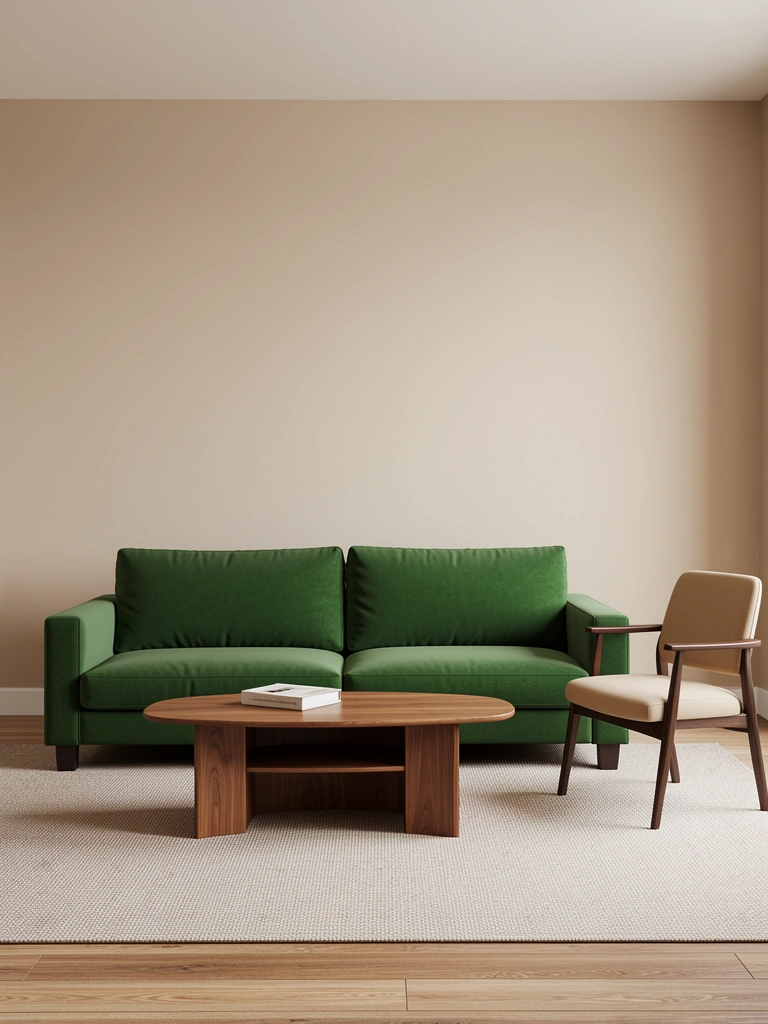
Decide whether your green sofa should feel fresh, cozy, or dramatic. Paint a large swatch on the main wall and place fabric samples from your sofa next to it to see harmony in natural light; this solves the common mis-match between sofa fabric and wall tone.
Aim for one dominant neutral (warm cream, soft grey, or greige), one accent (terracotta, deep navy, or mustard), and the sofa’s green as your hero. I often test one mood for a day and another the next; daylight and evening light change everything.
Shop this idea
2. Layer Textiles on the Sofa for Instant Harmony
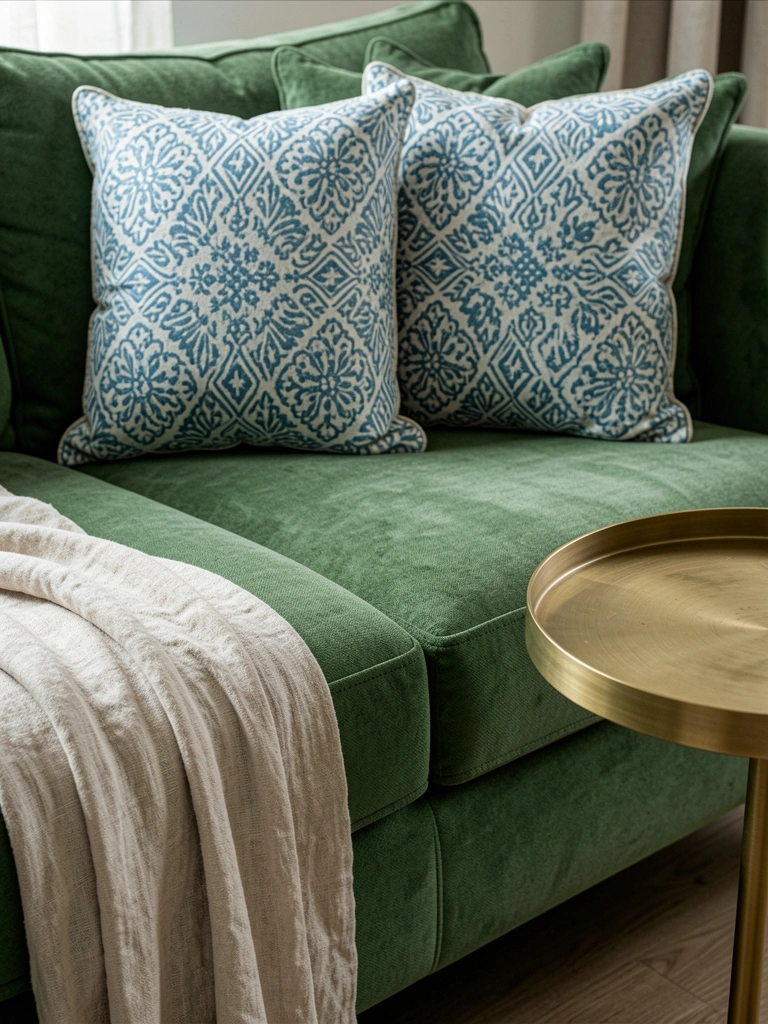
Start with cushions in two scales: one solid that picks up the sofa’s undertone and one patterned that introduces your accent hue. A neutral textured throw ties the look together and softens the overall colour, solving the “too-saturated sofa” problem.
Mix fabric textures—linen, boucle, and a velvet accent—to add depth without more colour. I like a rule of three textures and three colours total on the sofa; it keeps things curated and comfy.
Shop this idea
3. Anchor the Seating with a Rug That Pulls Colours Together
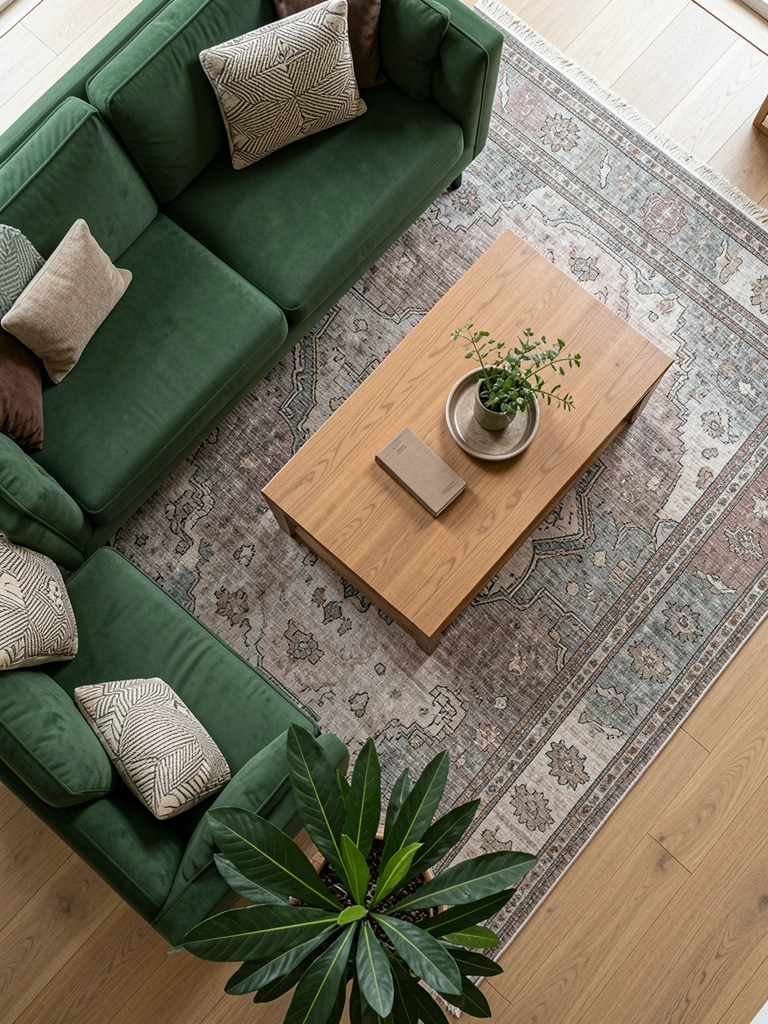
Choose a rug that contains the sofa’s green in a subtle pattern, or pick a warm neutral rug and use smaller coloured accents to echo the sofa. This fixes the common floating-sofa issue where seating feels disconnected from the rest of the room.
Scale matters: pick a rug that fits under front legs of the sofa and at least the front legs of adjacent chairs for cohesion. I often pick rugs with gentle patterns so they read as texture from a distance and don’t compete with cushions.
Shop this idea
4. Add Wall Art and Accents That Pick Up Accent Colours
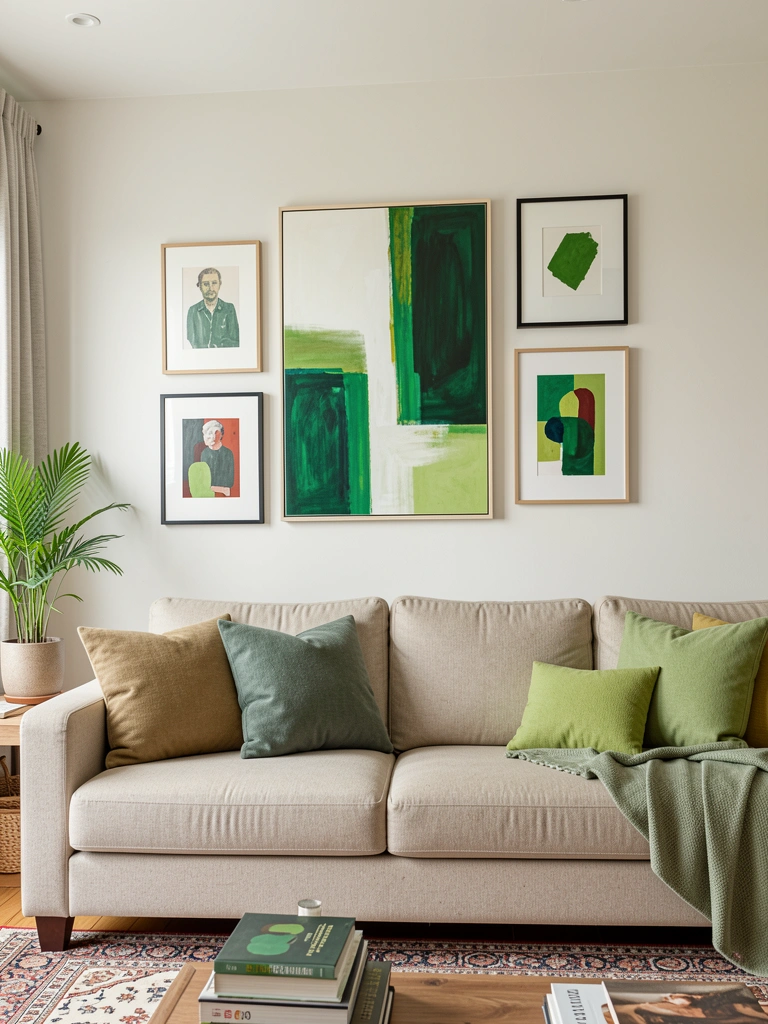
Place one larger art piece or a trio of frames centered over the sofa that introduce the accent hue and tie together wood tones and metal finishes. This solves the “empty wall” feeling and makes the sofa look intentional, not accidental.
Keep frames simple and consistent in finish, and leave breathing room around each piece for balance. I often swap art seasonally to tweak the accent colour without repainting.
Shop this idea
5. Balance Finishes and Lighting to Complete the Scheme
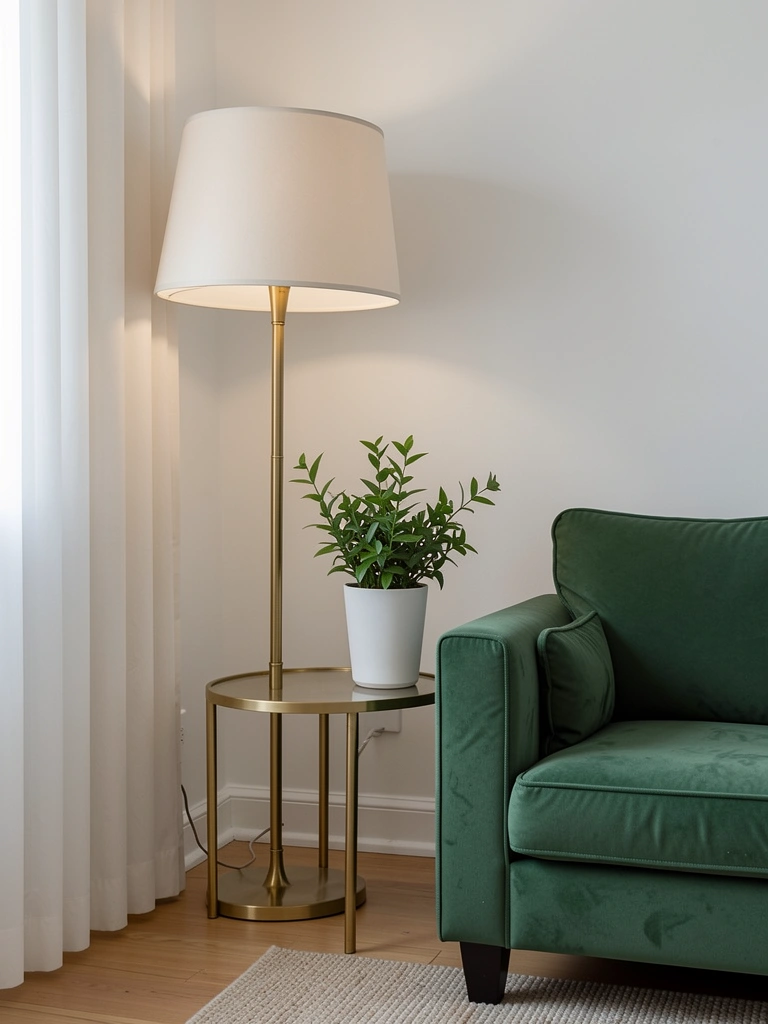
Choose two metals or finishes and repeat them around the room—brass lamp, black picture frames, and warm wood coffee table create cohesion. Good lighting warms the green and prevents it from looking flat or too cool at night.
Include at least three light sources: overhead, task, and ambient. I swapped a chrome lamp for brass once and the whole room felt cozier and more connected to the sofa’s green.
Shop this idea
Common Mistakes to Avoid
Mistake: Painting every wall a bold colour to match the sofa.
Why it does not work: It can overwhelm the room and make furniture feel trapped.
Do this instead: Use one accent wall or stay neutral on most walls; add colour through textiles and art. Paint Sample Pack
Mistake: Using too many competing accent hues.
Why it does not work: The room reads chaotic and the sofa loses its presence.
Do this instead: Limit to one accent hue plus neutrals and repeat it in three places for rhythm. Patterned Accent Cushion Covers
Mistake: Relying only on small decor pieces to pull the scheme together.
Why it does not work: Small items get lost and the colour plan feels unresolved.
Do this instead: Anchor with a rug, art, and a major lighting piece that echo your palette. Neutral Patterned Area Rug
Final Thoughts
Planning green sofa living room colour schemes is about choosing a clear mood, repeating two to three colours, and layering textures so the sofa feels like part of a considered whole. Start with a dominant neutral and introduce one accent colour through art, cushions, or a rug, then test the look in different light over a few days.
My trick is to live with three samples taped to the wall for a week; the one that still feels right on day five is usually the winner. Which mood are you leaning toward for your green sofa: calm and natural, bright and modern, or moody and cozy?
Relevant Articles
- green sofa living room ideas curtains
- green sofa living room ideas
- living room sofa design small spaces
